
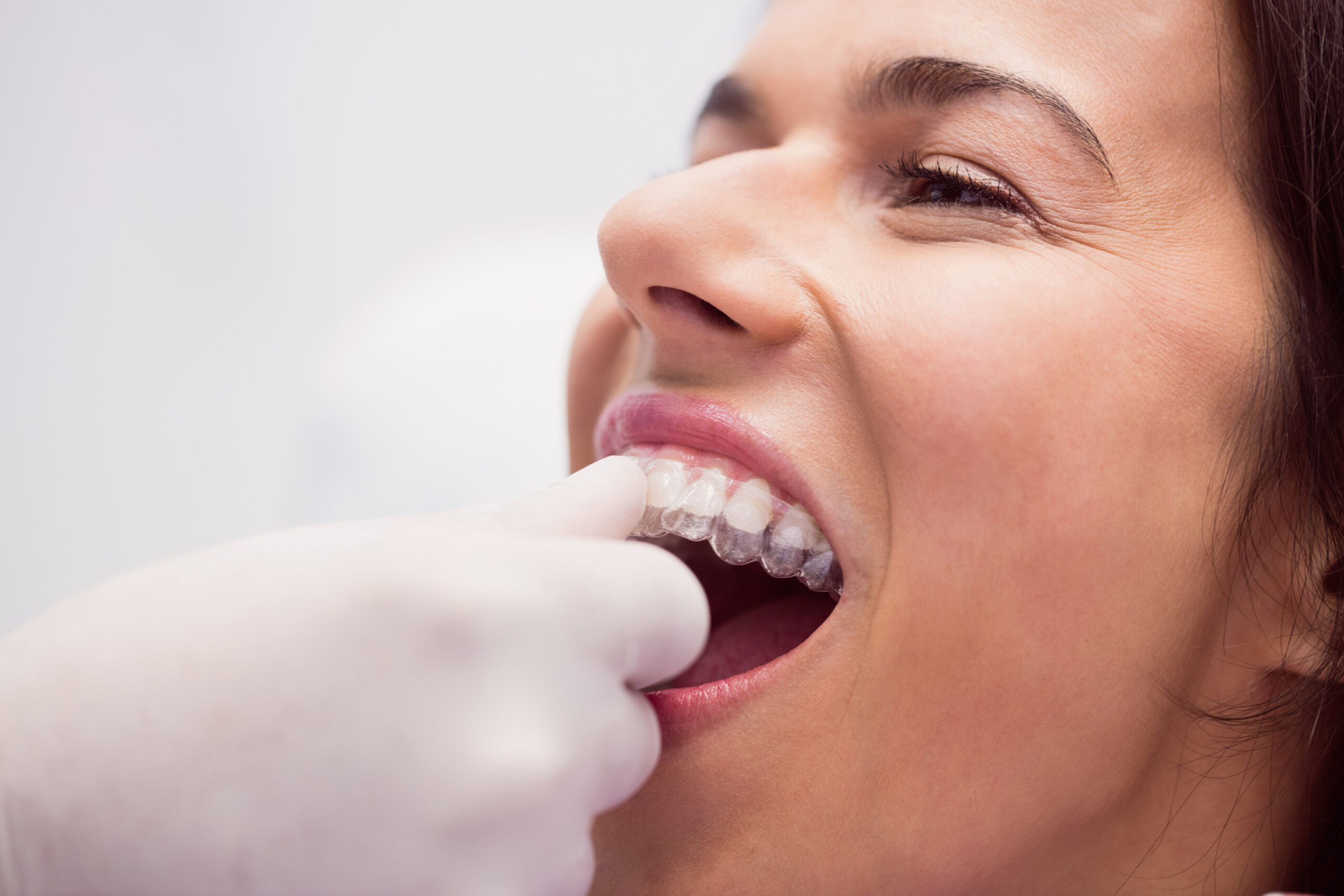
Ask most people what a mouth guard is for, and the answer comes back immediately: sports. Football, boxing, hockey. Contact stuff. The kind of activities where taking a hit to the face is a realistic possibility.
That association is not wrong, but it is incomplete in a way that ends up costing people quite a bit of money and quite a few teeth over time.
At Clove Dental Ventura, some of the most frustrating conversations we have are with patients sitting in the chair, looking at entirely preventable damage. A tooth ground down to a fraction of its original height. Enamel has worn so thin that sensitivity has become a daily issue. A cracked cusp that happened not during a rugby match but during an ordinary Tuesday night of sleep.
Mouth guard conversation deserves to be much bigger than it currently is, and it deserves to include a lot more people than those who play contact sports on weekends.
The Damage Happening While Nobody Is Paying Attention
Bruxism, the clinical term for teeth grinding, affects a significant portion of adults, and the majority of them have no idea it is happening. It occurs during sleep, which means there is no conscious awareness of it, no moment where someone decides to stop. The jaw clamps and grinds on its own timetable, often for hours at a stretch, while the rest of the body is completely unaware.
The symptoms that eventually surface tend to get attributed to other things first. A tension headache that shows up most mornings. Jaw soreness that feels like stress. A tooth that has become oddly sensitive to cold without any obvious reason. These are the early signals that something is happening at night, and they often go unconnected to grinding for months or years before a dentist identifies the pattern.
By that point, the damage is already visible. A custom mouth guard worn consistently would have absorbed that force every night instead of passing it directly through the teeth.
What Grinding Actually Does to Teeth Over Time
The effects of untreated bruxism do not arrive all at once. They accumulate slowly, which is exactly what makes them so easy to dismiss until the accumulation becomes impossible to ignore.
Here is what we typically see in patients who have been grinding without protection for several years:
- Enamel worn down significantly, often on the biting surfaces of back teeth
- Small chips and cracks are appearing on the front teeth with no clear cause
- Teeth that have visibly flattened along the edges, where they used to have a natural contour
- Increased sensitivity across multiple teeth simultaneously
- Jaw soreness and clicking that has developed into a persistent TMJ issue
- Recurring headaches centred around the temples and jaw
None of these is irreversible in isolation. Together, over enough time, they represent a restoration bill that a well-fitted mouth guard would have made entirely unnecessary.
Why the Pharmacy Version Usually Gets Abandoned
The over-the-counter mouth guards that sit on pharmacy shelves are better than nothing in an absolute sense. The problem is that better than nothing is a fairly low bar, and the real-world experience of wearing one of these products consistently tends to be poor enough that most people stop within a few weeks.
They are bulky. They do not fit the specific contours of an individual bite. They shift around during sleep. They make breathing through the mouth uncomfortable. And because wearing them feels unpleasant and disruptive, people quietly stop, and the protection disappears.
A custom mouth guard fitted at Clove Dental Ventura is made from impressions of the actual teeth. It sits precisely where it is supposed to, stays in place through the night, and is thin and comfortable enough that most patients report barely noticing it after the first few nights. The difference in the wearing experience between a generic product and a custom one is significant enough that it genuinely changes whether someone uses it consistently, which is the only version of mouth guard protection that actually works.
When To Take It Seriously
Some indicators that a mouth guard conversation is worth having sooner rather than later:
- Waking up with jaw tension or soreness that eases as the morning progresses
- Headaches that are most pronounced first thing in the morning
- A partner mentions grinding sounds during the night
- Teeth that look visually flatter or shorter than they used to
- Unexplained sensitivity across several teeth at once
- Clicking or popping in the jaw joint during eating or yawning
Any one of these on its own is worth mentioning at the next appointment. More than one appearing together is a fairly clear signal that something is happening overnight that the teeth are absorbing without any protection.
Ventura’s Active Lifestyle Creates Its Own Risks
Beyond the grinding conversation, there is a separate population of patients for whom a mouth guard is relevant simply because of how they spend their time. Ventura is an active community. Cycling, surfing, skateboarding, recreational football, and fitness classes all of these carry some level of impact risk to the face and teeth, and very few people participating in them are wearing any dental protection.
A single fall from a bike or an accidental collision during a recreational game can chip, crack, or knock out a tooth in an instant. The repair for that kind of injury is expensive, time-consuming, and results in permanent natural tooth structure lost in a moment that a properly fitted mouth guard would have absorbed entirely.
Conclusion
The hidden cost of not wearing a mouth guard is not hidden for long; it eventually shows up in sensitivity, in cracked teeth, in jaw problems, and in restorative treatment that runs far beyond what the protection would have cost. At Clove Dental Ventura, we would much rather have the preventive conversation early than the repair conversation later. If grinding, jaw soreness, or an active lifestyle sounds like your situation, come in and let us talk through what the right protection actually looks like for you specifically.